Why Car Lines Break Down in the First Place
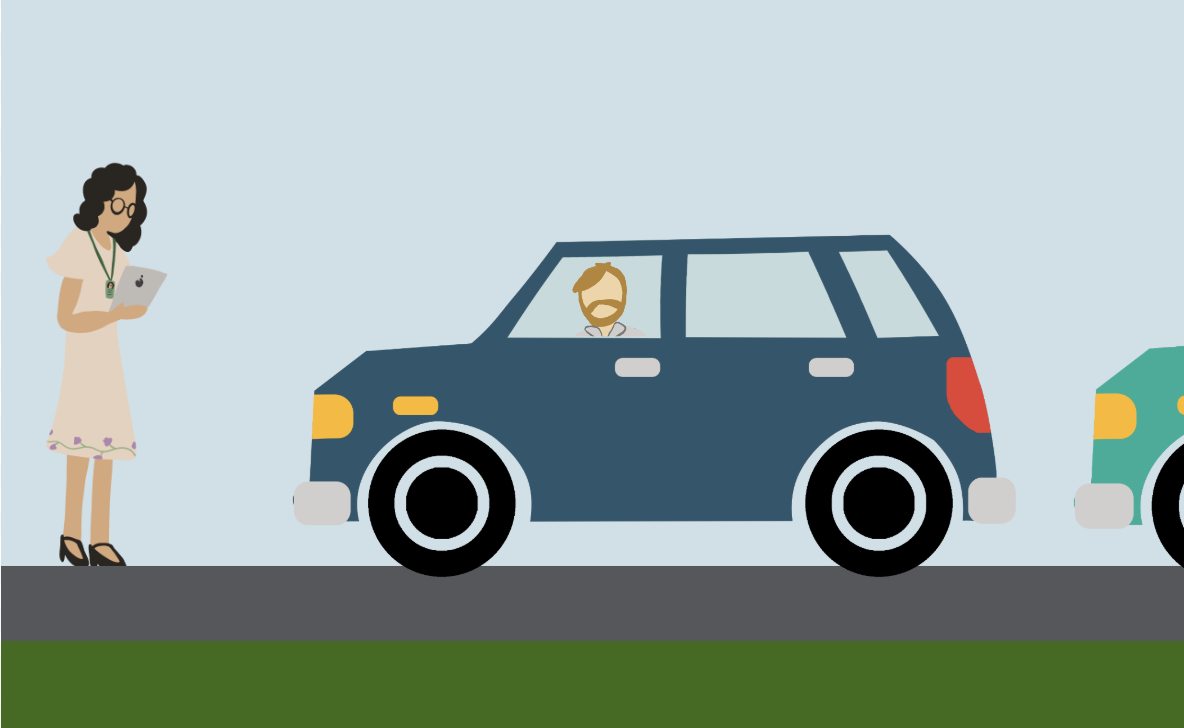
At 2:45 PM, most of the school day's structure evaporates. Parents are idling in cars stacked halfway down the block, students are excitedly awaiting their after-school plans, and office staff are fielding a dozen changes that came in in the last 30 minutes of school. It's no surprise that car line chaos is one of the most common challenges schools face every fall.
The good news: most car line problems aren't caused by staff or parents. They're caused by a handful of fixable issues: unclear routing, no streamlined system for plan changes, and communication that relies on hard-to-hear walkie-talkies and blaring PAs. Below are five strategies schools use to turn a stressful, unpredictable dismissal into a routine that runs like clockwork.
1. Map the Line Before You Redesign It
Before changing anything, walk your actual dismissal route the way a parent would. Time how long it takes from the entrance of the car line to the final pickup spot. Note every point where cars merge, stop, or bottleneck; often it's a single narrow turn or a crosswalk that's slowing everyone else down.
Many schools discover their car line problem isn't really about capacity; it's about a design issue at one specific pinch point. A simple change, like re-routing where buses cross the car line, changing the bus loading area, or adding a second merge lane, can cut wait times more than any amount of extra staffing.
2. Designate the Loading Zone and Position Staff Strategically
"Pull all the way forward" is one of the most common phrases yelled across a car line, and one of the least effective. Parents don't know how far "forward" is until they're already stopped in the wrong spot.
Mark stop points and loading zones
Instead of shouting directions, mark stop points and loading zones (cones, painted lines, or temporary signs work well) and assign several teachers or staff members to the loading zone. The flow should work like this:
Cars pull forward
All students "on deck" are loaded in
The full line of loaded vehicles departs all at once
This alone can eliminate a huge share of the stop-and-go behavior that backs up a line.
Use signage and staff positioning to keep traffic moving
Position staff or signage at decision points, not just at the loading zone. A staff member or sign stationed where cars first enter the lot, directing traffic into the correct lane immediately, prevents the confusion that builds up downstream. Simple, large, laminated signage (e.g., "Grades K-2 + Siblings this lane," "Grades 3-5 that lane") reduces the number of questions staff have to answer verbally, speeding up the whole line.
3. Keep Plan Changes from Slowing Down the Car Line
This is where most car line slowdowns actually originate, not the driving, but the information. A parent calls the office at 2:15 to say their child is going home with a different adult today. That information has to physically travel from the front office to a classroom and to the car line staff, often while the line is already forming. Multiply that by a dozen changes a day, and you have a car line that's waiting on paperwork, not traffic.
Schools that digitize dismissal plan changes by letting parents submit updates online instead of by phone or handwritten note consistently report the biggest single improvement in dismissal speed. A system like PickUp Patrol gives teachers an accurate, updated list before the bell rings and gives car line staff the same real-time information, so both groups can dismiss students quickly and accurately.
4. Replace Walkie-Talkie Communications with a Dismissal App for Staff
When a car line runs smoothly, it's usually because staff at the front of the line, at the loading zone, and inside the building with students are all working off the same real-time information, not because everyone individually remembers every change. Walkie-talkies are the traditional solution, but they can be hard to hear over engine noise and chatter. Increasingly, schools use a shared dashboard or app; outside staff can call for a student the moment their ride arrives, and inside staff are automatically alerted to release them.
5. Review and Adjust Every Few Weeks, Not Just at the Start of the Year
Car line plans that get built in August and never revisited tend to degrade as the year goes on; new families join, staff assignments shift, and small workarounds pile up until the system barely resembles the original plan. Set a recurring 15-minute check-in, even just once a month, where office staff and whoever supervises dismissal can flag what's not working and adjust zones, staffing, or timing before small issues become entrenched habits.

Putting It All Together
None of these strategies requires a major budget or a construction project. Most are process changes: clearer zones, staggered timing, better staff positioning, and, critically, getting dismissal plan changes out of sticky notes and phone calls and into a system that updates automatically. Schools that combine a few of these strategies typically see meaningfully shorter car lines within the first couple of weeks, along with a less frantic front office that isn't fielding the same last-minute calls every single afternoon.
The car line is just one piece of the day PickUp Patrol helps schools manage. From guardian verification to automated notifications to keeping every staff member on the same page, it's built to give front offices their afternoons back.
Interested in learning more about how PickUp Patrol can improve your dismissal process? Use the link below to view our website: