
The 2 PM Problem Every School Secretary Knows
Somewhere between 1:45 and 2:15 every afternoon, the front office phone turns into a countdown timer. A parent calls to say their child is going home with grandma today. Another calls because soccer practice was cancelled. A third is stuck at work and wants their child to take the bus home instead. Meanwhile, someone's standing at the counter with a form, another line is on hold, and a runner still has to get each of these changes to the right classroom before the bell rings.
It's one of the most universally exhausting parts of the school day for office staff, and almost none of it is really about the dismissal itself. It's about the fact that phone calls are the only tool parents have to make a change, and 2 PM is the only time they think to use it.
Why the Calls Spike at This Exact Time
This pattern isn't random. Parents wait until early-to-mid afternoon because that's when their own day's plans finally settle; a meeting wraps up, a text from another parent arrives, a doctor's appointment gets confirmed. By the time they think to tell the school, dismissal is close enough that they feel they have to call rather than email or send a note, worried it won't be seen in time.
In other words, the volume isn't the actual problem. The bottleneck is that phone calls are the only channel that feels reliable and fast enough to parents, so everyone funnels into it at once, right when staff has the least bandwidth to take calls.
Fix 1: Set (and Enforce) a Plan-Change Cutoff Time
Give parents a firm, clearly communicated cutoff (for example, 2:00 PM), after which only true emergencies are permitted to be called in, and anything submitted before that time is handled through your normal process, not a rushed call. A real deadline changes parent behavior over time: once families know changes made at 1:30 will actually be honored, and last-minute calls are treated as the exception rather than the norm, the volume at the deadline itself starts to drop.
The key is enforcing it consistently. If last-minute phone calls are always accommodated no matter what, there's no incentive for parents to plan ahead.
Fix 2: Give Parents a Way to Submit Changes Without Calling
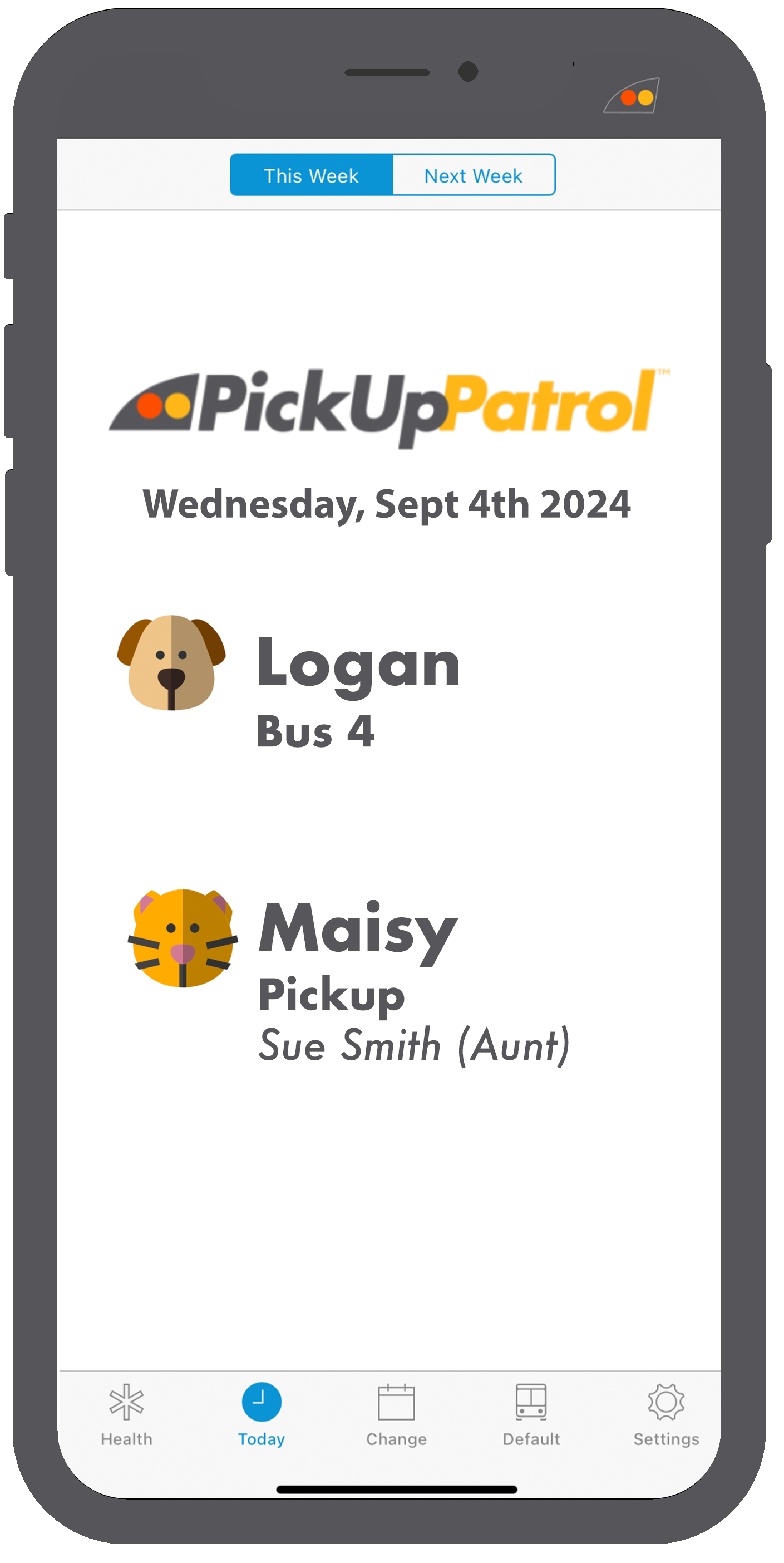
The single biggest lever here is removing the phone call as the default channel. When parents can submit a dismissal change through an app or online form, most of them will use it instead of calling, simply because it's faster for them too. Nobody enjoys being on hold.
Schools that shift to an online or app-based dismissal change system (like PickUp Patrol) typically see the bulk of routine changes move out of the phone queue immediately, because parents get a confirmation the moment they submit it and don't have to worry about whether a message got through.
Not only does a dismissal system like PickUp Patrol give parents peace of mind, but it also ensures the office knows all submitted changes are authorized by a permitted adult.
Fix 3: Separate "Urgent" from "Routine" with a Simple Triage System
Not every call needs the same urgency, but when they all arrive on the same line, they all feel urgent. Consider a two-track system: a general office line for anything non-time-sensitive, and a clearly marked "dismissal changes only" line or inbox that's checked at set intervals throughout the day rather than answered live every time it rings.
Even something as simple as an auto-message ("For dismissal changes, please use [link/app] / urgent issues after 2 PM, press 1") can filter out a large share of calls before a staff member ever picks up.
Fix 4: Publish Your Dismissal Change Policy Where Parents Actually See It
A lot of the 2 PM call surge comes down to parents simply not knowing there's a better way to make a change or not remembering it in the moment. Put your dismissal change policy (cutoff time, preferred method, what counts as an emergency) somewhere parents will actually encounter it: the school app, the weekly newsletter, a magnet or laminated card in every backpack at the start of the year, and a reminder at back-to-school night.
Policies that only live in a handbook don't change behavior. Policies that show up in the same place parents already look, like a reminder banner in a dismissal app, do.

Fix 5: Let Default Plans Handle the Repeat Requests
A meaningful chunk of "urgent" 2 PM calls aren't actually last-minute at all; they're recurring situations that just never got recorded as a standing plan. "He always goes to aftercare on Tuesdays." "She's picked up by her aunt on Fridays." If these are handled as one-off phone calls every single time, the office is re-solving the same problem weekly.
Setting up default or recurring dismissal plans for these situations so that aftercare, weekly carpools, and predictable schedules are already on file means only genuine exceptions need a phone call or same-day change at all.
Fix 6: Loop Teachers In Automatically Instead of Relaying by Hand
Even after a call is handled, someone still has to get that information to the right classroom before the final bell, usually by note, walkie-talkie, or a staff member walking it over personally. That's a second bottleneck hiding behind the first one, and it's often where the real time pressure comes from: office staff isn't just answering the phone, they're racing the clock to relay what they heard.
When plan changes are automatically shared with teachers, the office isn't the single point of communication between a parent's phone call and a classroom knowing what to do. The call still has to be answered, but everything downstream of it stops depending on a person physically delivering the message in time.
What a Smoother Afternoon Actually Looks Like
None of this requires an entirely new dismissal process; it requires giving parents an alternative to the phone, setting a real cutoff, and making sure the information that does come in doesn't have to be manually relayed to each classroom. Schools that put even two or three of these changes in place typically notice the difference within the first couple of weeks: fewer calls stacking up at 2 PM, less scrambling to relay last-minute notes, and a front office that can actually get other things done in the final hour of the school day.
The phone doesn't have to stop ringing entirely; emergencies will always happen. But it shouldn't be the only option parents reach for, and it shouldn't be competing with a dozen other routine changes for the same five minutes of staff attention every single afternoon.

Dismissal apps, like PickUp Patrol, can streamline dismissal management for the main office by giving:
Parents, a quick and easy way to communicate changes
Teachers, an up-to-date list of their students’ plans at the end of each day
Office staff, a way to view all student plans in one central location
Your entire school community, the peace of mind knowing each student is going exactly where they should be.
Curious how PickUp Patrol would work with your school's specific dismissal routine: car line, walkers, bus riders, and all? Visit pickuppatrol.net to see how it works and find out what it would take to get your front office out of the 2 PM scramble for good.